pet health

-
Vital animal health projects receive funding
Two longtime research funds have directed more than $170,000 in funding to researchers at the Western College of Veterinary Medicine (WCVM) in support of vital pet and equine health research projects. The Companion Animal Health Fund (CAHF) is investing more than $67,000 in eight pet health projects while the Equine Health Research Fund (EHRF) will provide eight teams of equine …
May 22nd, 2013 Full story »

-
Managing kitty’s chronic kidney disease
When my cat Bailey was first diagnosed with chronic kidney disease (CKD), she was only five years old. At the time, I didn’t know very much about the condition. I truly thought it was over for her and had prepared to say good-bye. Fortunately, my precious Bailey lived a long and happy life for another 13 years. It’s unknown what …
August 13th, 2012 Full story »

-
CAHF Research Grants: 2012-2013
Distribution of antifungal agent voriconazole in body fluids of healthy dogs after repeated dosing Drs. Susan Taylor, Julie Lemétayer, Patricia Dowling and Anthony Carr Fungal infections, a significant cause of disease in dogs, frequently involve the lungs and eyes. Although long-term treatment of four to six months is typically required, systemic antifungal therapy often fails once the inflammation stops and …
June 05th, 2012 Full story »

-
Funds back baker’s dozen of research projects
Researchers at the Western College of Veterinary Medicine (WCVM) have received more than $183,000 in grants to support a baker’s dozen of vital research projects that will enhance equine and companion animal health care in Canada. “The calibre of the submitted research proposals was very high this year — making it difficult for the funds to make a final selection …
March 27th, 2012 Full story »

-
Making the world a better place
For Judy Davis of Vancouver, B.C., a typical week is packed with volunteer activities. Even though she’s been retired for several years, the busy octogenarian divides her time among a wide variety of community organizations including a seniors’ centre as well as a health information and referral centre. Another organization on her regular volunteer list is the University of British …
February 03rd, 2012 Full story »

-
Fat cats and portly pups
Q. How prevalent is obesity in pets? There are tremendous variations among the few research studies that focus on pet obesity. One study estimates that about 40 per cent of dogs and 25 per cent of cats are overweight. Other studies report more conservative numbers. Pet obesity is a global problem that varies from area to area. Demographics, climate and …
December 29th, 2011 Full story »

-
Home, hazardous home
What’s in your home that’s hazardous to your pet’s health? Three specialists at the Western College of Veterinary Medicine — Drs. Mark Wickstrom, Jennifer Ogeer and Dennilyn Parker — talk about what makes some common foods and products harmful to your pets, the common clinical signs to watch for, and the therapies that veterinarians use to counteract the toxic effects …
December 19th, 2011 Full story »

-
Protecting the health of pets and people
Most pet owners would agree that a cuddle or a lick from their favourite four-legged creatures can do a lot to make a bad day more bearable. But with all of the attention being paid to zoonotic diseases – those which can transfer from animals to humans – should we be concerned that spending time with our pets can actually …
December 05th, 2011 Full story »
-
Xylitol-based water additives: safe for pets
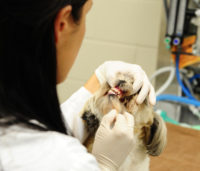
Xylitol, a natural sugar substitute, is added to some oral hygiene products for humans including chewing gum, toothpaste and mouthwash. With 40 per cent less calories than regular sugar, xylitol is also commonly found in human diet and baking products – advertised as safe for diabetics and other individuals with high blood glucose levels. Although it has no known toxicity …
December 05th, 2011 Full story »

-
A splash of prevention
My cat has terrible breath. I try to follow the veterinarian’s orders by brushing her teeth, but she’s pretty feisty – even at 17 years old. A few scratches later, and with me dripping in sweat, I usually have to give up. But there might be a simpler alternative: my pet may be able to get a healthier mouth from …
December 02nd, 2011 Full story »