pet health

-
Camp promotes healthy habits
Over 110 elementary students got a healthy start to their day when they visited the Western College of Veterinary Medicine (WCVM) for the One Health Healthy Food Camp on June 10. Students in Grades 4, 5 and 6 at Saskatoon’s Brunskill and Greystone Heights Schools attended the morning camp that included four stations filled with information, games and hands-on activities. …
June 27th, 2014 Full story »

-
Do pulse crops belong in pet food?
A three-year study at the University of Saskatchewan (U of S) may find a new use for some of the province’s most popular pulse crops – peas, faba beans and lentils. The study plans to look at the digestibility and glycemic index of different pulse starches for cats and dogs. It’s a follow up to the successful beagle study that …
May 20th, 2014 Full story »

-
Nesfatin-1: obesity, diabetes fighter?
In North America, metabolic diseases such as diabetes and obesity are becoming epidemic among people as well as their pets. As many as 50 per cent of cats and dogs in domestic households are overweight or obese and science still doesn’t fully understand why some individuals are more prone to metabolic disease than others. Dr. Suraj Unniappan, an associate professor …
February 13th, 2014 Full story »
-
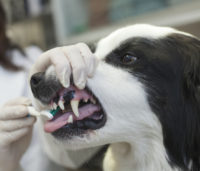
Preventing dental disease in your pet
Many pet owners think that their dogs’ bad breath is normal — but “doggie breath” actually signifies that there’s more going on with your pet’s dental health than you may realize. “Animals can have bad breath without having significant dental disease, but most often, the bad breath that’s associated with bad periodontal disease is pretty noticeable,” says Dr. Jordan Woodsworth, wellness …
December 16th, 2013 Full story »

-
The twists and turns of research
It’s common knowledge that no matter how well you prepare, research experiments never go perfectly according to plan. I think back to this idea as I watch a team of veterinary specialists try, for the fourth time, to unsuccessfully place a catheter into the spleen of an anesthetized dog. “It [can be] a little bit frustrating sometimes just because it’s …
November 07th, 2013 Full story »

-
Medical imaging career demanded change
Veterinary radiologist Dr. John Pharr has always embraced change and the opportunity to learn — and that thirst for knowledge has defined his career at the Western College of Veterinary Medicine (WCVM). “Things are always changing, and that never stops,” reflects Pharr, who retired from the WCVM’s Department of Small Animal Clinical Sciences on June 30. “I’ve been doing this …
October 24th, 2013 Full story »
-
New clinical tool helps vets save lives
A $20,000 gift from Dr. David Stark — a Saskatoon-based dental specialist in endodontics — has allowed the Western College of Veterinary Medicine’s Veterinary Medical Centre (VMC) to purchase a clinical tool that provides critical data about blood coagulation. It’s vital information that can mean life or death for an animal, says Dr. Casey Gaunt, an assistant professor in the veterinary …
October 02nd, 2013 Full story »
-
Rabies: what you need to know
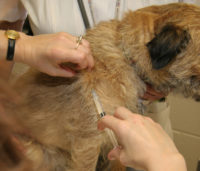
Most pet owners aren’t concerned about their animals contracting rabies, but the reality is that infection with the deadly virus usually results in death for animals as well as people. “There’s no cure for rabies disease,” says Dr. Jordan Woodsworth, wellness veterinarian at the Western College of Veterinary Medicine’s Veterinary Medical Centre. Rabies is transmitted through salivary secretions of infected …
September 27th, 2013 Full story »

-
CAHF Research Grants, 2013-14
Can a new test help more cats survive pancreatic cancer? Drs. Elemir Simko, Melissa Meachem, Beverly Kidney, Marion Jackson and Elisabeth Snead Feline pancreatic cancer is a deadly disease that kills most cats within seven days of being diagnosed. By the time the disease is discovered, it has usually spread through the cat’s body leaving veterinarians and owners with few, …
September 19th, 2013 Full story »

-
Preventing tick-borne illness in your pets
It’s a common scene in Saskatchewan – you let your dog out for a romp in the woods and then spend the next half hour searching for ticks. These little arachnids will happily make their home on anything with blood – you, your dog, your cat, your horse, your snake. No creature is safe from their bites. And although no …
July 23rd, 2013 Full story »