Western College of Veterinary Medicine
-
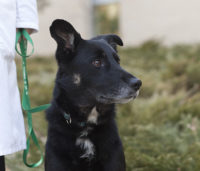
New clinical tool helps vets save lives
A $20,000 gift from Dr. David Stark — a Saskatoon-based dental specialist in endodontics — has allowed the Western College of Veterinary Medicine’s Veterinary Medical Centre (VMC) to purchase a clinical tool that provides critical data about blood coagulation. It’s vital information that can mean life or death for an animal, says Dr. Casey Gaunt, an assistant professor in the veterinary …
October 02nd, 2013 Full story »
-
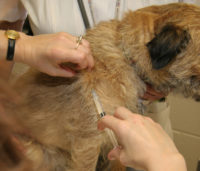
Rabies: what you need to know
Most pet owners aren’t concerned about their animals contracting rabies, but the reality is that infection with the deadly virus usually results in death for animals as well as people. “There’s no cure for rabies disease,” says Dr. Jordan Woodsworth, wellness veterinarian at the Western College of Veterinary Medicine’s Veterinary Medical Centre. Rabies is transmitted through salivary secretions of infected …
September 27th, 2013 Full story »

-
CAHF fellow helps fungus-filled dogs
Physicians use the drug voriconazole in their human patients to cure fungal infections in difficult-to-treat sites and to combat fungal diseases such as systemic aspergillosis. But can this anti-fungal drug be used in dogs? While the use of voriconazole in dogs hasn’t been extensively studied, the drug does offer advantages over other medications. “This drug has a very good penetration …
September 19th, 2013 Full story »

-
CAHF Research Grants, 2013-14
Can a new test help more cats survive pancreatic cancer? Drs. Elemir Simko, Melissa Meachem, Beverly Kidney, Marion Jackson and Elisabeth Snead Feline pancreatic cancer is a deadly disease that kills most cats within seven days of being diagnosed. By the time the disease is discovered, it has usually spread through the cat’s body leaving veterinarians and owners with few, …
September 19th, 2013 Full story »

-
Keeping pets healthy in their senior years
As my 15-year-old dog has grown older, I’ve noticed some common signs of an aging animal. Sparky is a bit slower, and he now favours a nice nap over a long walk. He’s developed arthritis in his hind legs and has needed more than one tooth to be removed. But although Sparky looks a bit disheveled, he’s still just as …
August 26th, 2013 Full story »

-
Preventing tick-borne illness in your pets
It’s a common scene in Saskatchewan – you let your dog out for a romp in the woods and then spend the next half hour searching for ticks. These little arachnids will happily make their home on anything with blood – you, your dog, your cat, your horse, your snake. No creature is safe from their bites. And although no …
July 23rd, 2013 Full story »

-
Ultrasound key to improving sample accuracy
A researcher at the Western College of Veterinary Medicine (WCVM) is conducting a study that will pinpoint the most effective and economical way to aspirate canine lymph nodes. Lymph node aspiration is a diagnostic tool commonly performed by veterinarians. The technique involves using a thin needle to extract cells from a lymph node so they can be sent off to …
July 09th, 2013 Full story »

-
A safer solution to a sticky problem?
When my little dog Maggie was young, she would chew anything she could get her paws on: a lamp cord, cell phone charger, TV cable, garbage cans, clothing, the bathroom curtain and even the bottom of a door. But most of all, she loved to gnaw on the pig’s hoof that I gave her to chew. One day Maggie seemed …
June 01st, 2013 Full story »

-
Vital animal health projects receive funding
Two longtime research funds have directed more than $170,000 in funding to researchers at the Western College of Veterinary Medicine (WCVM) in support of vital pet and equine health research projects. The Companion Animal Health Fund (CAHF) is investing more than $67,000 in eight pet health projects while the Equine Health Research Fund (EHRF) will provide eight teams of equine …
May 22nd, 2013 Full story »
-
Cancer scientists go to the dogs for help
Though similarities between human and canine cancers have long been recognized, researchers are just now beginning to explore the potential of using canine oncology research models. “Canine oncology research models are still really new,” says Dr. Valerie MacDonald, associate professor of medical oncology in the WCVM’s Department of Small Animal Clinical Sciences. MacDonald, who treats hundreds of dogs diagnosed with …
April 08th, 2013 Full story »