WCVM Veterinary Medical Centre

-
Top 5 questions about periodontal disease
What’s the most frequently diagnosed disease in all ages of dogs? Periodontal disease, says Dr. Candace Grier-Lowe, assistant professor in the Western College of Veterinary Medicine’s Department of Small Animal Clinical Sciences. “I would say about nine out of 10 patients that we see in the WCVM’s Veterinary Medical Centre for routine procedures and yearly exams and vaccines have some …
December 01st, 2011 Full story »
-
The WCVM’s ICU from eyes inside
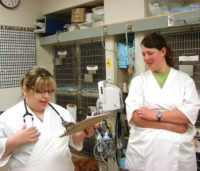
When I first walk into the small animal intensive care unit (ICU) at the WCVM Veterinary Medical Centre, there’s activity everywhere: dogs are barking, machines are beeping and clinicians are discussing the unit’s cases. At first, the level of activity and noise is overwhelming. But it soon becomes evident that everything is organized and controlled in this high-paced environment where …
November 01st, 2011 Full story »

-
CT unit delivers diagnostic clarity
Medical imaging specialist Dr. Tawni Silver can’t hide her enthusiasm when she describes the Western College of Veterinary Medicine’s new CT (computed tomography) unit. In the world of veterinary medical imaging, this machine is like the Cadillac of CT scanners with the ability to simultaneously acquire 16 three-dimensional “slices” or high-resolution images of an animal during each 0.5-second revolution. “With …
October 11th, 2011 Full story »

-
People, dogs and bacteria
When penicillin was first introduced in the early 1940s, it was effective against nearly all bacteria. But nearly 70 years later, penicillin has lost its punch: while bacteria such as Streptococci are still frequently susceptible to the antibiotic, Staphylococcus aureusare often resistant. “Antibiotic resistance has emerged very quickly because bacteria have a very short generation time and can evolve and …
September 04th, 2011 Full story »
-
Sharpen up your pet vaccine know-how
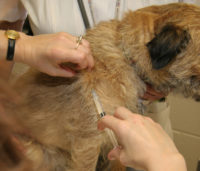
For Dr. Tony Carr, there’s no real debate about whether vaccinations are an essential for pets. “They definitely are necessary,” says Carr, a small animal internal medicine specialist at the Western College of Veterinary Medicine in Saskatoon, Sask. “There’s been some bad press about vaccines lately, but I think there’s a much greater risk involved when animals are exposed to …
August 05th, 2011 Full story »

-
CAHF Research Grants: 2008-2009
Methicillin-resistant Staphylococcal aureus (MRSA) in dogs Drs. Joseph Rubin and Manuel Chirino-Trejo, WCVM; Alice Wong and Steve Sanche, Royal University Hospital Methicillin-resistant Staphylococcal aureus (MRSA) is an emerging pathogen in animals worldwide; very little is known about the strain types or prevalence of MRSA in dogs. With the recent isolation of MRSA from canine patients at WCVM, there’s a need …
June 05th, 2008 Full story »