University of Saskatchewan
-
Poop, parasites and public health
It may look like ordinary, everyday dog poop, but to researchers at the Western College of Veterinary Medicine (WCVM), those little lumps contain a treasure trove of public health information. That’s one of the key facts that I learned this summer as a WCVM research student, travelling around Saskatchewan collecting dog feces — a job that gave me first-hand experience …
February 03rd, 2014 Full story »
-
Study tests faster cure for UTIs in dogs
Anyone who has taken antibiotics knows that the longer the treatment time, the more likely a dose is missed. And as the symptoms disappear, so does the motivation to finish the entire vial of pills. Owners face the same challenges when treating their pets with antibiotics. While the typical antibiotic treatment time for women with urinary tract infections (UTIs) usually …
January 06th, 2014 Full story »

-
Addressing dog over-population in the North
Dr. Jasmine Dhillon, a graduate student at the Western College of Veterinary Medicine (WCVM), is working with some First Nations people to talk about methods of dog population control and dog bite prevention in their communities. First Nations people in Canada’s North have traditionally depended on dogs for protection, companionship and transportation. Although dogs continue to play an important role, …
December 17th, 2013 Full story »
-
Preventing dental disease in your pet
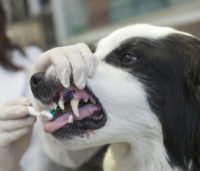
Many pet owners think that their dogs’ bad breath is normal — but “doggie breath” actually signifies that there’s more going on with your pet’s dental health than you may realize. “Animals can have bad breath without having significant dental disease, but most often, the bad breath that’s associated with bad periodontal disease is pretty noticeable,” says Dr. Jordan Woodsworth, wellness …
December 16th, 2013 Full story »

-
Cats join WCVM nutrition study
They won’t be walking around the Bowl like the pack of beagles did over the last few years, but a group of cats are joining a nutrition study similar to the one that made the dogs famous at the University of Saskatchewan (U of S). The beagles that the campus community was so fond of seeing were part of a …
December 02nd, 2013 Full story »

-
The twists and turns of research
It’s common knowledge that no matter how well you prepare, research experiments never go perfectly according to plan. I think back to this idea as I watch a team of veterinary specialists try, for the fourth time, to unsuccessfully place a catheter into the spleen of an anesthetized dog. “It [can be] a little bit frustrating sometimes just because it’s …
November 07th, 2013 Full story »
-
Rabies: what you need to know
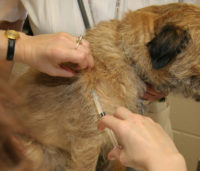
Most pet owners aren’t concerned about their animals contracting rabies, but the reality is that infection with the deadly virus usually results in death for animals as well as people. “There’s no cure for rabies disease,” says Dr. Jordan Woodsworth, wellness veterinarian at the Western College of Veterinary Medicine’s Veterinary Medical Centre. Rabies is transmitted through salivary secretions of infected …
September 27th, 2013 Full story »

-
CAHF fellow helps fungus-filled dogs
Physicians use the drug voriconazole in their human patients to cure fungal infections in difficult-to-treat sites and to combat fungal diseases such as systemic aspergillosis. But can this anti-fungal drug be used in dogs? While the use of voriconazole in dogs hasn’t been extensively studied, the drug does offer advantages over other medications. “This drug has a very good penetration …
September 19th, 2013 Full story »

-
CAHF Research Grants, 2013-14
Can a new test help more cats survive pancreatic cancer? Drs. Elemir Simko, Melissa Meachem, Beverly Kidney, Marion Jackson and Elisabeth Snead Feline pancreatic cancer is a deadly disease that kills most cats within seven days of being diagnosed. By the time the disease is discovered, it has usually spread through the cat’s body leaving veterinarians and owners with few, …
September 19th, 2013 Full story »

-
Keeping pets healthy in their senior years
As my 15-year-old dog has grown older, I’ve noticed some common signs of an aging animal. Sparky is a bit slower, and he now favours a nice nap over a long walk. He’s developed arthritis in his hind legs and has needed more than one tooth to be removed. But although Sparky looks a bit disheveled, he’s still just as …
August 26th, 2013 Full story »