U of S

-
Do pulse crops belong in pet food?
A three-year study at the University of Saskatchewan (U of S) may find a new use for some of the province’s most popular pulse crops – peas, faba beans and lentils. The study plans to look at the digestibility and glycemic index of different pulse starches for cats and dogs. It’s a follow up to the successful beagle study that …
May 20th, 2014 Full story »

-
Dogs good models for cancer research
Researchers in the College of Medicine are spending time at the Western College of Veterinary Medicine (WCVM), keeping an eye on dogs with cancer in an effort to improve the effectiveness of cancer treatment in humans. “Dogs and humans get the same cancers,” said Troy Harkness, a molecular geneticist and professor in the Department of Anatomy and Cell Biology in …
April 17th, 2014 Full story »

-
Service dogs earn free eye exams at WCVM
Veterinary ophthalmologists at the Western College of Veterinary Medicine’s Veterinary Medical Centre (VMC) are participating in an annual North American program that offers free eye examinations for service animals during the month of May. The program, which is operated by the American College of Veterinary Ophthalmologists (ACVO), honours service animals that are used as guides, handicapped assistance, detection, military, search …
March 13th, 2014 Full story »

-
Nesfatin-1: obesity, diabetes fighter?
In North America, metabolic diseases such as diabetes and obesity are becoming epidemic among people as well as their pets. As many as 50 per cent of cats and dogs in domestic households are overweight or obese and science still doesn’t fully understand why some individuals are more prone to metabolic disease than others. Dr. Suraj Unniappan, an associate professor …
February 13th, 2014 Full story »
-
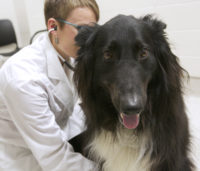
Poop, parasites and public health
It may look like ordinary, everyday dog poop, but to researchers at the Western College of Veterinary Medicine (WCVM), those little lumps contain a treasure trove of public health information. That’s one of the key facts that I learned this summer as a WCVM research student, travelling around Saskatchewan collecting dog feces — a job that gave me first-hand experience …
February 03rd, 2014 Full story »
-
Study tests faster cure for UTIs in dogs
Anyone who has taken antibiotics knows that the longer the treatment time, the more likely a dose is missed. And as the symptoms disappear, so does the motivation to finish the entire vial of pills. Owners face the same challenges when treating their pets with antibiotics. While the typical antibiotic treatment time for women with urinary tract infections (UTIs) usually …
January 06th, 2014 Full story »

-
Addressing dog over-population in the North
Dr. Jasmine Dhillon, a graduate student at the Western College of Veterinary Medicine (WCVM), is working with some First Nations people to talk about methods of dog population control and dog bite prevention in their communities. First Nations people in Canada’s North have traditionally depended on dogs for protection, companionship and transportation. Although dogs continue to play an important role, …
December 17th, 2013 Full story »
-
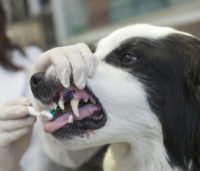
Preventing dental disease in your pet
Many pet owners think that their dogs’ bad breath is normal — but “doggie breath” actually signifies that there’s more going on with your pet’s dental health than you may realize. “Animals can have bad breath without having significant dental disease, but most often, the bad breath that’s associated with bad periodontal disease is pretty noticeable,” says Dr. Jordan Woodsworth, wellness …
December 16th, 2013 Full story »

-
Cats join WCVM nutrition study
They won’t be walking around the Bowl like the pack of beagles did over the last few years, but a group of cats are joining a nutrition study similar to the one that made the dogs famous at the University of Saskatchewan (U of S). The beagles that the campus community was so fond of seeing were part of a …
December 02nd, 2013 Full story »

-
The twists and turns of research
It’s common knowledge that no matter how well you prepare, research experiments never go perfectly according to plan. I think back to this idea as I watch a team of veterinary specialists try, for the fourth time, to unsuccessfully place a catheter into the spleen of an anesthetized dog. “It [can be] a little bit frustrating sometimes just because it’s …
November 07th, 2013 Full story »