Pet Health

-
Pets get their groove back with rehabilitation
Meet Rose, a four-year-old, shepherd-border collie cross with alert, intelligent eyes. Judging by the way Rose tears around the dog park these days, you’d never guess that two years ago she was facing down a debilitating injury that made it painful to walk. Her owner, Jan Morris of Saskatoon, Sask., first noticed something was wrong when Rose showed an occasional …
March 01st, 2012 Full story »

-
Grad student’s feline research earns award
Feline health research conducted by Dr. Melissa Meachem of the Western College of Veterinary Medicine (WCVM) earned top marks during the 2011 American College of Veterinary Pathologists‘ (ACVP) annual meeting that was held from December 3-7 in Nashville, Tenn. Meachem, a 2008 WCVM graduate and a PhD student in the college’s Department of Veterinary Pathology, received the ACVP Young Investigator …
January 02nd, 2012 Full story »

-
Fat cats and portly pups
Q. How prevalent is obesity in pets? There are tremendous variations among the few research studies that focus on pet obesity. One study estimates that about 40 per cent of dogs and 25 per cent of cats are overweight. Other studies report more conservative numbers. Pet obesity is a global problem that varies from area to area. Demographics, climate and …
December 29th, 2011 Full story »

-
Home, hazardous home
What’s in your home that’s hazardous to your pet’s health? Three specialists at the Western College of Veterinary Medicine — Drs. Mark Wickstrom, Jennifer Ogeer and Dennilyn Parker — talk about what makes some common foods and products harmful to your pets, the common clinical signs to watch for, and the therapies that veterinarians use to counteract the toxic effects …
December 19th, 2011 Full story »

-
Protecting the health of pets and people
Most pet owners would agree that a cuddle or a lick from their favourite four-legged creatures can do a lot to make a bad day more bearable. But with all of the attention being paid to zoonotic diseases – those which can transfer from animals to humans – should we be concerned that spending time with our pets can actually …
December 05th, 2011 Full story »
-
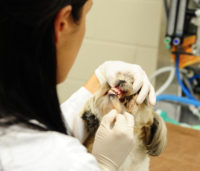
Xylitol-based water additives: safe for pets
Xylitol, a natural sugar substitute, is added to some oral hygiene products for humans including chewing gum, toothpaste and mouthwash. With 40 per cent less calories than regular sugar, xylitol is also commonly found in human diet and baking products – advertised as safe for diabetics and other individuals with high blood glucose levels. Although it has no known toxicity …
December 05th, 2011 Full story »

-
A splash of prevention
My cat has terrible breath. I try to follow the veterinarian’s orders by brushing her teeth, but she’s pretty feisty – even at 17 years old. A few scratches later, and with me dripping in sweat, I usually have to give up. But there might be a simpler alternative: my pet may be able to get a healthier mouth from …
December 02nd, 2011 Full story »

-
Top 5 questions about periodontal disease
What’s the most frequently diagnosed disease in all ages of dogs? Periodontal disease, says Dr. Candace Grier-Lowe, assistant professor in the Western College of Veterinary Medicine’s Department of Small Animal Clinical Sciences. “I would say about nine out of 10 patients that we see in the WCVM’s Veterinary Medical Centre for routine procedures and yearly exams and vaccines have some …
December 01st, 2011 Full story »

-
Northern dogs: sentinels for parasites?
Large, free-roaming dog populations in northern Saskatchewan communities often carry parasites that can pose significant health risks to people living in the area. The dogs can act as disease reservoirs, passing parasite eggs in their feces. People then become infected from environmental contamination. “If we see parasites on the rise in the dog population, then we know that humans in …
November 30th, 2011 Full story »
-
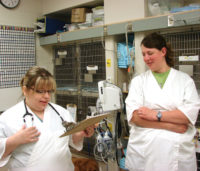
The WCVM’s ICU from eyes inside
When I first walk into the small animal intensive care unit (ICU) at the WCVM Veterinary Medical Centre, there’s activity everywhere: dogs are barking, machines are beeping and clinicians are discussing the unit’s cases. At first, the level of activity and noise is overwhelming. But it soon becomes evident that everything is organized and controlled in this high-paced environment where …
November 01st, 2011 Full story »